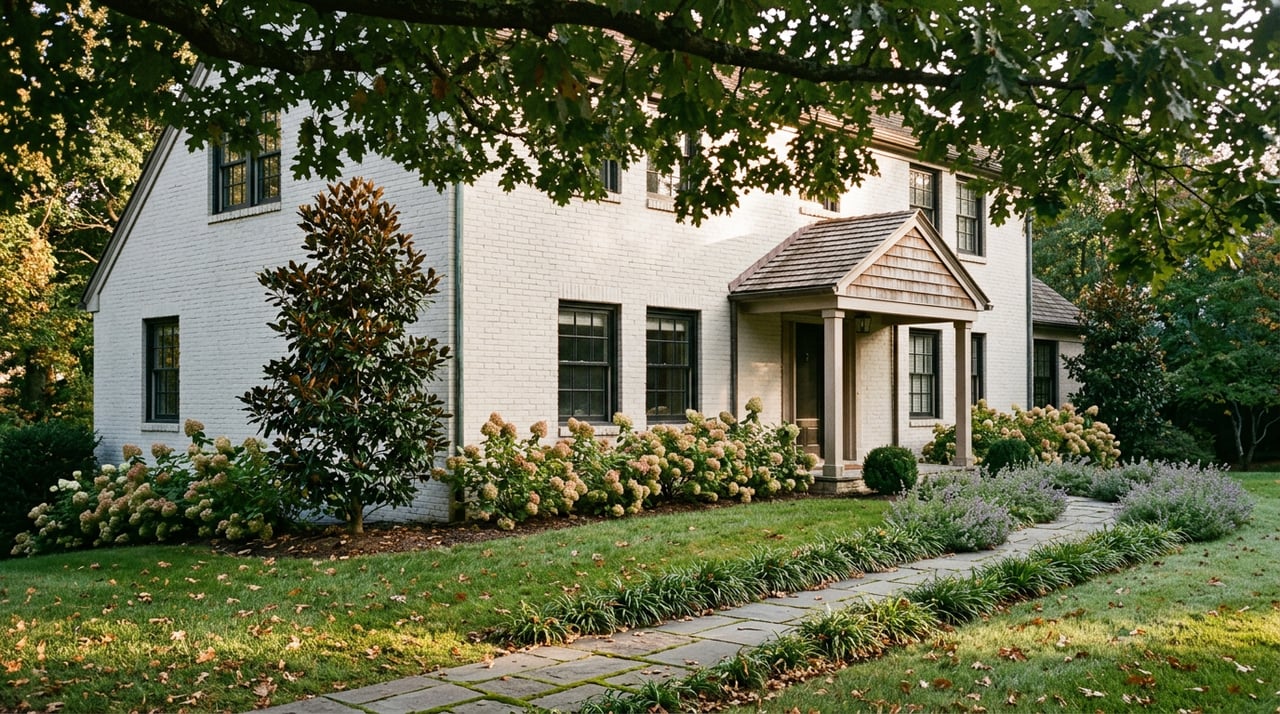
In 2023, a handful of people who live near the Spring Valley Shopping Center picked up rakes, gloves, and a few contractor bags and started pulling storm debris out of a creek nobody had assigned them to clean. There was no city contract, no NPS crew, no ribbon cutting. What had been an unmarked stretch of forest along Spring Valley Run became a half-mile dirt path on Quebec Street NW, shaded by hardwood trees, built by residents who decided the neighborhood needed it and then made it exist.
Three years later, that trail is still there, still informal, still maintained by the people who use it. And this September, elsewhere in the neighborhood, American University's Katzen Arts Center is reopening its museum for the fall season with an opening reception on September 5, from 6 to 9 p.m. Two resets are landing on the same calendar. One came from a handful of neighbors with garden tools. The other comes from a university with a director, a mailing list, and a 30,000-square-foot gallery. Neither waited for the other.
That's the actual shape of Spring Valley's public life, and it's worth naming because most write-ups of this neighborhood skip it entirely. They describe the Tudors, the embassies, the lot sizes. They rarely explain that the things residents actually do here on a given weekend come from two completely different sources: an institutional calendar run by the university next door, and an informal one that residents assemble themselves out of a deli counter, a shopping center parking lot, and a creek nobody official was managing.
The Deli Counter Still Runs The Show
Wagshal's has operated out of the Colonial Revival storefronts at Spring Valley Shopping Center since 1925, long enough that regulars still call it the president's deli. The center itself was built out between 1939 and 1950 by the development firm W.C. and A.N. Miller, the same company that platted most of the neighborhood's residential streets, and it still reads like something built for a specific place rather than dropped in from a franchise template. There's a meat counter, a bakery, and, depending on when you show up, a line out the door.
Across Massachusetts Avenue at Spring Valley Village, Millie's has become the spot where you run into people you know. The patio opens for the season with garage door-style windows rolled up, picnic tables under dark blue umbrellas, fish tacos and lobster rolls, frosé for the adults and an ice cream window with flavors like blueberry and salted caramel for everyone else. As locals put it, you'll almost always see one of your neighbors at Millie's. That's not marketing copy. That's just what a small commercial strip does when it's been serving the same few blocks for decades instead of chasing turnover.
None of this required a developer's master plan. It required a shopping center old enough to have a personality and a community small enough that the same faces show up at the same tables.
The Trail Nobody Assigned Anyone To Build
The Spring Valley Run trail is the clearest version of this pattern, because it has almost no institutional fingerprints on it at all. One longtime resident described the origin plainly: it used to just be a forest, and in 2023 a group of neighbors cleaned all the debris out of the creek and made the trail themselves. Now people walk their dogs there and kids play around the creek on a path that exists because a few residents decided it should.
That trail also happens to sit at the edge of a much larger network of public land that Spring Valley residents treat as an extension of their own backyard, most of which is managed by the National Park Service rather than by anyone local:
- Battery Kemble Park, a former Civil War artillery site with no entrance fees or permits required, popular enough with dog walkers that it functions as an informal social hub
- Glover-Archbold Park, nearly 200 acres of undeveloped woodland following Foundry Branch, managed by NPS as part of the Rock Creek Park system and known among birders for breeding Veery and Wood Thrush
- The paved route toward Georgetown and the Maryland suburbs that lets residents bike or walk out of the neighborhood entirely without touching a car
The Spring Valley Run trail is the connector piece that ties the neighborhood's own creek to that larger system, and it's the only piece of it that residents built with their own hands rather than inheriting from federal park boundaries drawn decades ago.
September Resets AU's Calendar Too, On Its Own Terms
The Katzen Arts Center's fall reopening is the institutional half of this pattern, and it runs on a completely different clock. The museum has been closed while staff install new work, and it reopens to the public on September 5 with three exhibitions: Observer: The Street Photographs of Norman S. Carr, Double Feature: Two Graphic Narratives by Mary Garrard, and a mixed-media piece by Ahn Chang-Hong. Admission is free, the museum sits at the corner of Nebraska and Massachusetts Avenues right off the Glover Gate, and the collection includes the Watkins Collection, the Corcoran Legacy Collection, and the Alper Initiative for Washington Art, a standing effort to document DC's own art history rather than import someone else's.
The university around it is in a leadership transition of its own this year, with an interim president in place as of this summer. The museum's calendar doesn't move because of that. It's set by faculty, students, and a gallery director, which is exactly the point: the parts of AU that Spring Valley residents actually use, the museum, the aquatic center where kids have taken swim lessons for years, the Eric Friedheim Quad that people cut through on evening walks past Hurst Hall and Bender Library, keep running on their own internal schedule regardless of who's in the president's office.
The neighborhood's other fall programming is even more locally sourced. FoodFirst, a culinary school operating out of the neighborhood, runs cooking classes that show up on local message boards every season, with a beginner course called Cooking with Confidence now paired with a new knife skills class and fresh baking sessions covering breads, tarts and custards, and cakes. It's a private storefront business setting its own calendar, the same way the trail crew set theirs.
What This Actually Means If You Live Here
If you're trying to figure out what's worth doing in Spring Valley this fall, you're really tracking two separate lists. One is institutional: AU's museum reopening, its box office, its shuttle schedule. The other is informal: a deli line, a patio season, a cooking class that fills up because neighbors talk about it, a creek trail that exists because a few people decided it should. Most guides to this neighborhood only know about the first list. The second one is where the actual character of the place lives, and it doesn't show up unless you've been paying attention to who built what and why.
That distinction matters beyond September. It's the difference between a neighborhood where amenities get handed down from a developer's site plan and one where residents keep filling in the gaps themselves, one trail, one storefront class, one deli line at a time. Spring Valley has managed to do both at once for a long time, and neither half needs the other's permission to keep going.
Abrams Residential spends as much time tracking a neighborhood's actual rhythm as its comps, because the two aren't as separate as they look on paper. If you're weighing a move to Spring Valley, or you already live here and want a read on what the market's doing this fall, schedule a complimentary home strategy consultation and we'll walk through it with you.