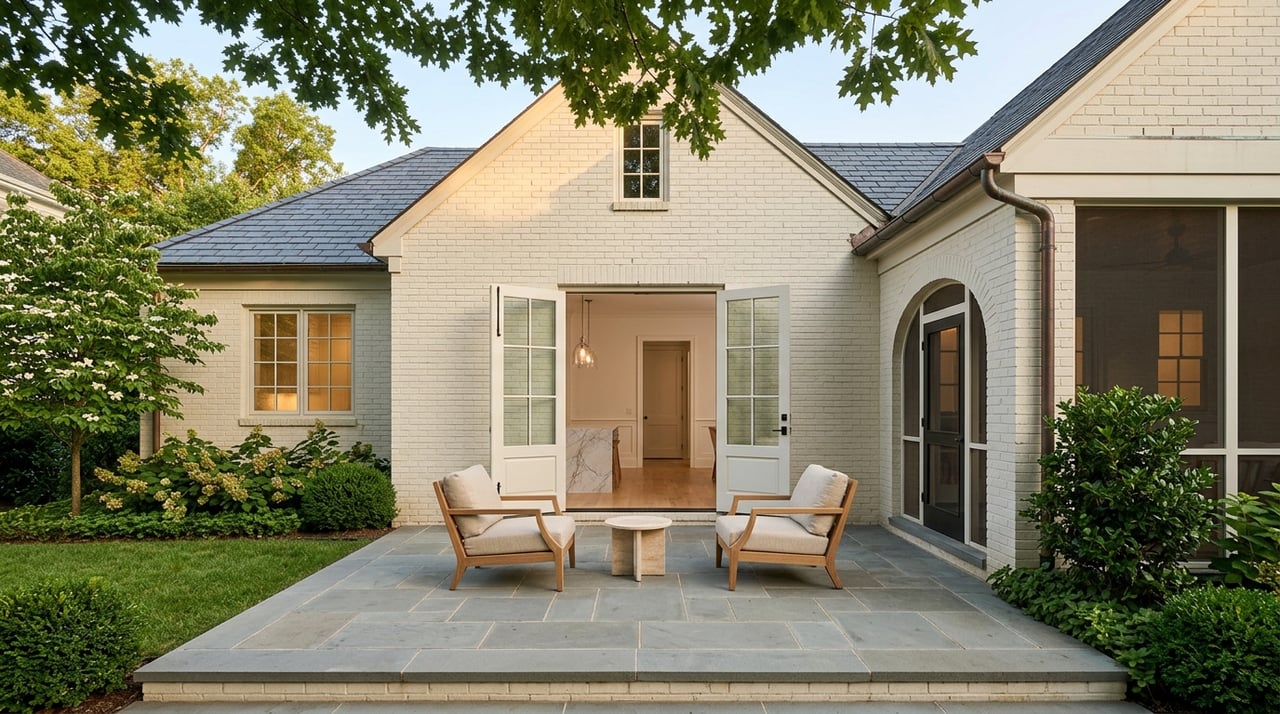
If you are thinking about how a home should feel in Palisades, indoor-outdoor living is a smart place to start. This neighborhood already leans into trees, hills, and river-adjacent scenery, so the best homes often make outdoor space feel like a natural extension of daily life. Whether you are updating a home for your own use or thinking ahead about future resale, the right design choices can improve comfort, function, and presentation. Let’s dive in.
Why indoor-outdoor living fits Palisades
Palisades is not an urban infill setting where outdoor space feels secondary. According to the DC Office of Planning, it is a more single-family-home-oriented part of Ward 3 with tall trees, parks, and a residential character shaped by the landscape.
That setting gives indoor-outdoor design real context. The area’s hilly terrain, wooded lots, and river-following layout support homes that connect interior rooms to decks, patios, porches, and gardens in a way that feels natural rather than forced.
There is also a strong outdoor lifestyle nearby. Fletcher's Cove offers boating, biking, hiking, fishing, and access to the towpath and Capital Crescent Trail, which makes exterior living space in Palisades feel connected to how many residents actually spend their time.
Start with the site, not the trend
In Palisades, the most successful indoor-outdoor designs are site-sensitive. That means working with the lot’s slope, tree canopy, privacy conditions, and views instead of applying a one-size-fits-all idea.
A flat backyard may support a simple garden patio and dining terrace. A sloped lot may work better with tiered outdoor spaces, low retaining walls, and transitions that create usable zones without overwhelming the landscape.
This approach matters for resale too. Buyers often respond to outdoor spaces that feel calm, intentional, and connected to the home’s setting, especially in neighborhoods where natural character is part of the appeal.
Decks and terraces that feel connected
Prioritize views and flow
A rear deck or terrace works best when it acts as a transition space. In Palisades, that often means framing tree views, stepping down into the yard, or creating a direct connection from the kitchen, family room, or main living area.
Oversized hardscape can feel out of place on a wooded lot. A more effective approach is often a deck or terrace sized for real use, with enough space for dining, lounging, and circulation, while still letting the landscape remain the focus.
Use levels thoughtfully
Because Palisades includes hilly terrain, tiered outdoor spaces can be especially useful. A main-level terrace for dining, a lower lounge area, or a path leading to a garden seating spot can make a sloped property feel much more usable.
These layered spaces also help the yard feel organized. Instead of one large, exposed area, you create a sequence of outdoor rooms that feel more private and more integrated with the home.
Screened porches and covered spaces
Make summer more comfortable
Warm weather is a big part of the indoor-outdoor equation in Washington. NOAA climate normals for Washington Reagan Airport show average daily highs of 85.1°F in June, 89.6°F in July, and 87.8°F in August, along with annual precipitation of 41.82 inches.
That mix of heat and rainfall makes covered outdoor space especially practical. A screened porch, covered dining area, or shaded lounge can extend the time you actually use the space, rather than limiting it to perfect-weather days.
Add flexibility without overbuilding
Covered rooms can do a lot of work for a Palisades home. They create a place for morning coffee, casual dinners, reading, or entertaining, while still preserving the connection to the yard and tree canopy.
For many homes, a screened porch is one of the most versatile options. It can feel more protected than an open deck, but still lighter and more connected to the outdoors than a fully enclosed addition.
Landscaping that supports privacy and shade
Work with Palisades’ tree canopy
Ward 3 has the most extensive tree canopy in the city, and that shapes how outdoor design should work here. In Palisades, landscaping often feels strongest when it builds on that existing character instead of trying to compete with it.
Layered plantings, shade-tolerant understory species, and soft transitions between the house and the street can help the property feel settled and cohesive. These choices also support privacy without making the yard feel closed off.
Use structure where the lot needs it
On sloped sites, low retaining walls can help define outdoor rooms and improve circulation. They can also support planting beds and create a more finished transition between terraces, paths, and lawn areas.
The goal is usually not to flatten everything. It is to make the land more usable while keeping the natural topography that gives Palisades much of its appeal.
Keep materials calm and consistent
Indoor-outdoor living usually works best when the palette feels restrained. In a neighborhood with a wooded, river-adjacent character, materials that feel calm and durable often fit better than anything too flashy or overly formal.
That can mean simple decking, understated paving, neutral exterior finishes, and landscape elements that blend with the property’s natural setting. When indoor finishes and outdoor materials relate to each other in tone and texture, the transition between spaces feels much smoother.
This is also where design discipline matters. A quieter palette tends to photograph well, show well, and age well, which can be important if you are making updates with resale in mind.
Questions buyers and sellers should ask
If you are evaluating a Palisades home, style is only part of the conversation. The more useful questions often relate to how the site actually performs day to day.
Consider asking:
- How much usable shade does the yard get in summer?
- Is there room for dining, lounging, and circulation without overcrowding the lot?
- Does the outdoor space capture views or privacy in a meaningful way?
- Would a screened porch or covered area make the home more functional?
- Are slopes being handled well with stairs, terraces, or retaining walls?
- Could any planned exterior changes trigger permit or preservation review?
For sellers, these questions can help shape smart pre-listing decisions. For buyers, they can help you see whether a property’s outdoor potential is already realized or still waiting to be improved.
Plan for permits early
Outdoor projects in DC are not just design decisions. The District’s Department of Buildings says porches and decks are permit work, and exterior construction may require a surveyor’s plat.
Depending on the project, plan review can also involve Historic Preservation, DDOT, and DOEE. That means permitting should be part of early planning, not a final box to check once the design is finished.
If you are buying with renovation in mind, this is worth understanding upfront. If you are preparing to sell after improvements, complete and well-planned exterior work can reduce friction later in the process.
Check tree rules before changing the yard
In a neighborhood known for mature trees, tree-related rules matter. DDOT says residents and contractors need permission to plant, prune, or remove trees in the public right-of-way.
DDOT also notes that trees over 100 inches in circumference are heritage trees and cannot be removed. On a heavily landscaped or wooded lot, that can affect where you place a deck, terrace, driveway adjustment, or other exterior feature.
For Palisades homes, mature canopy is often part of the value. Preserving that character while designing usable outdoor space is usually the best long-term move.
Confirm historic status before exterior changes
Before making visible exterior updates, confirm whether the property is in a historic district or otherwise protected. The District’s Historic Preservation Office notes that DC has more than 50 historic districts and more than 27,000 protected properties.
That does not mean every project becomes difficult. It does mean you should verify the review path early if you are planning changes to porches, facades, railings, or other visible features.
For buyers, this is part of due diligence. For sellers, it is part of smart project planning, especially if exterior presentation is central to your listing strategy.
Indoor-outdoor living as a resale advantage
In Palisades, indoor-outdoor living is more than a design trend. It matches the neighborhood’s setting, climate, and lifestyle in a way that can make a home feel more complete.
A deck that captures the view, a screened porch that expands daily use, and landscaping that adds privacy without losing the natural feel can all strengthen how a property lives and how it shows. When those decisions are grounded in the site and executed thoughtfully, they tend to resonate with buyers.
If you are weighing updates before listing or trying to understand what kind of outdoor space adds real value in Palisades, a neighborhood-specific strategy matters. To talk through your options, connect with Abrams Residential and schedule a complimentary home strategy consultation.
FAQs
What indoor-outdoor features fit Palisades homes best?
- Decks, terraces, screened porches, covered dining areas, and layered landscaping tend to fit Palisades well because they work with the neighborhood’s wooded lots, hilly terrain, and river-adjacent setting.
Do decks and porches in DC usually require permits?
- Yes. The DC Department of Buildings says porches and decks are permit work, and some projects may also require a surveyor’s plat and review by other agencies depending on scope.
Why are screened porches useful for Palisades homes?
- Screened porches can make outdoor space more usable during Washington’s warm, rainy summer months by adding shade and weather protection while preserving an open-air feel.
Do tree rules affect outdoor projects in Palisades?
- Yes. DDOT says permission is required for planting, pruning, or removing trees in the public right-of-way, and heritage trees over 100 inches in circumference cannot be removed.
Should Palisades homeowners check for historic district rules?
- Yes. Before changing visible exterior features, you should confirm whether the property is in a historic district or otherwise protected, since review may be required.
How can indoor-outdoor design help resale in Palisades?
- Thoughtful outdoor spaces can improve how a home lives and how it shows by highlighting privacy, shade, views, and a stronger connection to the neighborhood’s natural character.