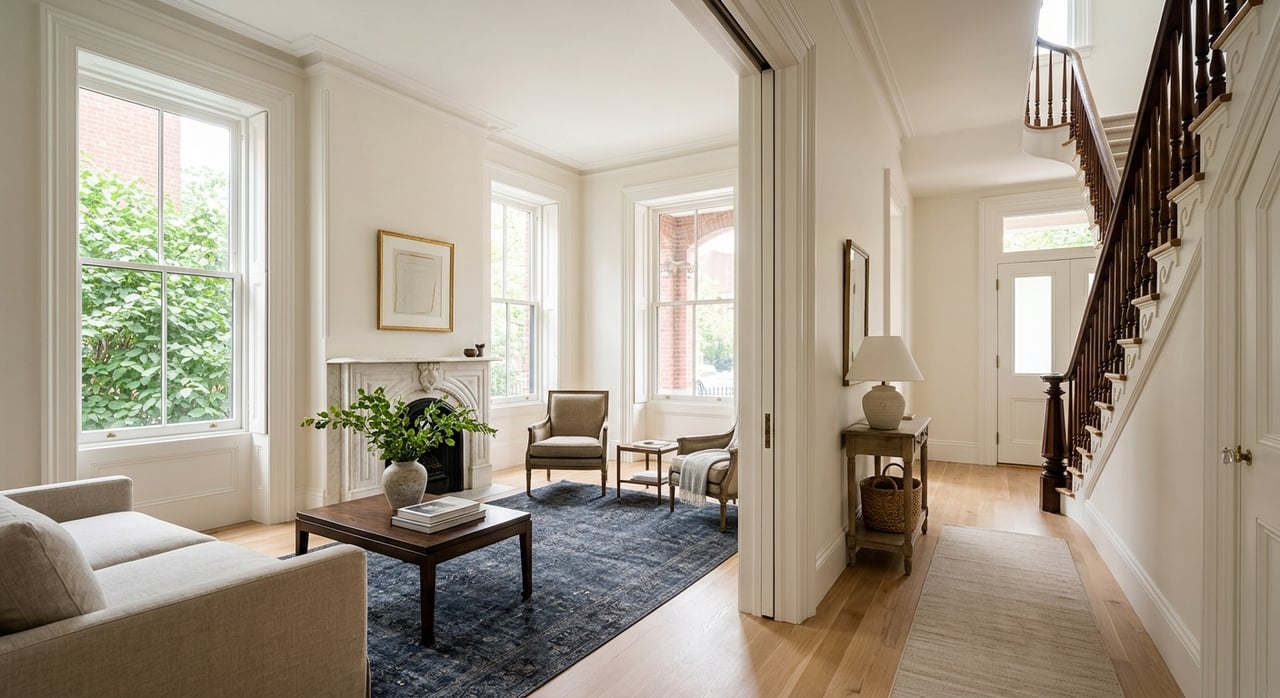
Thinking about buying a historic rowhouse in Old Town Alexandria? You are not just choosing a home with character. You are buying into one of the country’s oldest preservation environments, where architecture, maintenance, and renovation plans all come with a specific set of rules. If you understand what to look for before you make an offer, you can move forward with more confidence and fewer surprises. Let’s dive in.
Why Old Town rowhouses stand apart
Old Town Alexandria offers a housing experience that feels distinct from many other close-in markets around Washington. According to the City of Alexandria, the Old and Historic District was designated in 1946 and is the third historic district in the United States, covering nearly 100 blocks in the heart of the original town. The city also notes that more than 200 Alexandria structures were built before 1820, with most of them located in Old Town.
That matters because a historic rowhouse here is more than a charming brick home. It is often part of a regulated historic streetscape, where exterior changes may be reviewed to protect the district’s architectural character. For buyers, that means your due diligence should go beyond layout, finishes, and price per square foot.
Understand the historic designation first
One of the most important early steps is confirming exactly how a property is designated. In Alexandria, only Old and Historic Alexandria and Parker-Gray are local historic districts regulated by the Board of Architectural Review, or BAR. As the city explains on its preservation overview page, National Register districts are not regulated by the Historic Preservation department in the same way.
That distinction can shape everything from window replacement to exterior additions. Before you assume a renovation will be simple or heavily restricted, confirm whether the home is in the local district, designated as a 100-year-old building, or only located in a National Register district.
Know the architectural era
Old Town rowhouses span multiple architectural periods, and each one can signal different exterior details and maintenance priorities.
Federal and Georgian homes
Many of Old Town’s earliest rowhouses date to the Federal and Georgian eras. These homes often feature simple brick facades and traditional sash windows, including 12/12, 9/9, or 6/6 patterns, as described by the city’s historic preservation resources.
If you are drawn to one of these earlier homes, pay close attention to original materials. The closer a home remains to its historic exterior form, the more likely future changes will need to respect that original design.
Greek Revival and early Victorian homes
These homes often show more classical or transitional proportions. The city’s window guidance associates them with 6/6, 6/9, and 4/4 sash patterns.
For buyers, this is a reminder that small details matter in Old Town. A window pattern that looks minor on paper may be an important part of the building’s historic identity.
Late Victorian and Italianate homes
Later 19th-century rowhouses may include more decorative features, such as 1/1 or 2/2 windows, bay or oriel forms, and more ornamental exterior elements. The city also notes that decorative cast-iron steps and railings are often appropriate on late-19th- and early-20th-century Victorian buildings.
These homes can offer a more embellished look, but they also may come with additional repair and replacement considerations if original features are still in place.
Why proportions matter in Old Town
A lot of Old Town rowhouses feel narrow, vertical, and visually balanced for a reason. The city’s design guidelines reflect the typical townhouse facade width of roughly 15 to 20 feet. That narrow bay rhythm is part of what gives Old Town its historic streetscape.
For you as a buyer, this helps explain why some additions or facade changes are more complicated than expected. Even when extra square footage seems possible, it still has to fit the scale and proportions of the surrounding context.
What renovation rules mean for buyers
If the home is in the local historic district, exterior work may require review before you can move forward. The City of Alexandria requires a Certificate of Appropriateness for new construction and exterior alterations visible from a public right of way. It also requires a Permit to Demolish for demolition of more than 25 square feet of material, regardless of visibility.
Interior work does not require BAR approval, but that does not mean you can skip city review altogether. The city also states that permits are required for most construction and maintenance work, including many renovations, additions, decks, porches, stoops, fences, and retaining walls. In practical terms, the usual order is to answer the historic preservation question first, then the permit question.
Plan for review timelines
If you are buying with renovation in mind, timing matters. BAR hearings are held on the first and third Wednesday of each month except August, and applications must be complete at least 30 days before the hearing date. Some smaller items can be approved administratively, and complete administrative approvals generally take less than five business days, according to the city’s preservation process guidance.
That timeline can affect your move-in plans, contractor schedule, and overall budget. It is worth understanding before you take on a project with visible exterior changes.
What to inspect closely before you buy
Historic rowhouses reward careful inspection. In Old Town, a home’s long-term ownership experience often comes down to how well key exterior systems and materials have been maintained.
Windows and shutters
Windows are one of the most important value and maintenance items in a historic rowhouse. The city encourages owners to retain and repair historic windows whenever possible, and changes to window size, material, location, operation, or lite pattern can trigger review. The city also encourages clear, non-reflective storm windows as a way to improve energy performance while preserving the facade.
When touring a home, ask whether the windows are original, repaired, replicated, or replaced. If replacements were made, try to confirm whether they matched the historic configuration.
Roofs and drainage
Roofs do a lot of work in Old Town, both visually and functionally. The city’s roofing guidance notes that original roofing should be preserved and repaired whenever possible, and that visible replacement roofing requires staff review. It also states that metal and slate roofs can last 50 to 100 years with proper maintenance.
You will want to look beyond the roof covering itself. Ask about gutter and downspout maintenance, prior leaks, and whether any water issues have affected masonry or interior walls.
Masonry and moisture
Brick condition is one of the biggest items to evaluate in an Old Town rowhouse. Alexandria’s masonry guidance warns against harsh cleaning methods such as sandblasting or power washing because they can damage the hard-fired surface of historic brick. The city also notes that repointing should match historic mortar profiles, and that sealants can trap moisture.
During showings or inspections, look for moisture staining, deteriorated mortar joints, painted or sealed brick, and signs of earlier aggressive cleaning. Water management problems often show up first in masonry.
Stoops, railings, fences, and chimneys
Street-facing exterior details can carry both aesthetic and regulatory importance. The city says historic stoops, steps, and railings should be retained on street-facing sides of early buildings, and new work should use materials such as wood, cast iron, precast concrete, or stone rather than synthetic products. It also outlines fence rules, including that front-yard fences must be 50 percent open and no more than 4 feet high, while side and rear fences generally may be up to 6 feet high.
If a home has altered stoops, missing railings, or modified chimneys, ask whether those changes were approved. In some cases, visible demolition or chimney modification can trigger review.
Solar and other modern upgrades
Modern energy upgrades are possible, but visibility matters. The city’s solar guidance says rooftop solar should be minimally visible from the public right of way, low-profile, and installed without damaging historic materials.
If solar is part of your long-term plan, think about that before you buy. Roof visibility, roof condition, and the specific house orientation can all affect what may be practical.
Ask about easements before you close
A preservation easement is not a minor paperwork item. The city explains that an easement is recorded in land records, runs with the land, and binds future owners. Easements can protect open space, exterior facades, or significant interior features, and owners typically need written approval before alterations or additions.
That means you should confirm whether the property is subject to a recorded easement and who holds it. The Alexandria Department of Planning and Zoning maintains a list of properties with easements, and there may also be additional easements held by other entities.
Historic tax credits may matter
If you are considering a substantial rehabilitation project, incentives may be part of the conversation. According to the Virginia Department of Historic Resources, Virginia’s historic rehabilitation tax credit is 25 percent of eligible expenses and may apply to both owner-occupied and income-producing buildings. The federal credit is 20 percent of eligible expenses, but it applies only to income-producing properties.
These programs come with certification requirements, spending thresholds, and compliance standards. They are not a fit for every buyer, but if you are planning a major restoration, they are worth understanding early.
A smart showing checklist
When you tour a historic rowhouse in Old Town, bring a more targeted set of questions than you might for a newer home.
- Confirm whether the property is in the local historic district, designated as a 100-year-old building, or subject to a preservation easement.
- Ask for copies of any BAR approvals, permits, and final inspections tied to exterior work.
- Ask whether windows, shutters, roof materials, stoops, masonry, or chimneys have been repaired, altered, or replaced.
- Look for signs of roof leaks, clogged drainage, deteriorated mortar, painted brick, or moisture staining.
- If you plan to renovate, ask early whether the likely path is staff review or a public BAR hearing.
- Remember that even when interior work does not require BAR approval, city permits may still be required.
How to buy with confidence
Buying a historic rowhouse in Old Town Alexandria can be incredibly rewarding. You get timeless architecture, a strong sense of place, and the chance to own a piece of the city’s built history. You also take on a home where details matter, records matter, and planning ahead matters.
The right strategy is not to be intimidated by the process. It is to understand the designation, inspect the right systems, and ask thoughtful questions before you commit. If you want guidance on evaluating historic housing stock, renovation potential, and offer strategy in competitive DMV neighborhoods, connect with David Abrams.
FAQs
What makes Old Town Alexandria rowhouses different from other historic homes?
- Old Town rowhouses are often located within a locally regulated historic district, which means exterior changes may be subject to review by the City of Alexandria.
What renovation work on an Old Town Alexandria rowhouse may need BAR approval?
- In the local historic district, new construction and exterior alterations visible from a public right of way generally require a Certificate of Appropriateness, while interior work does not require BAR approval.
What should you inspect first when buying a historic rowhouse in Old Town Alexandria?
- Focus on windows, roofing, drainage, masonry, stoops, railings, chimneys, and any signs of moisture damage or unapproved exterior alterations.
What is a preservation easement on an Old Town Alexandria property?
- A preservation easement is a recorded legal restriction that runs with the land and may require written approval before certain alterations or additions are made.
Can you add solar panels to a historic rowhouse in Old Town Alexandria?
- Potentially, yes, but the city says rooftop solar should be minimally visible from the public right of way, low-profile, and installed without damaging historic materials.
Are there tax credits for renovating a historic rowhouse in Virginia?
- Yes. Virginia offers a 25 percent historic rehabilitation tax credit for eligible projects, and a 20 percent federal credit may be available for income-producing properties.